
Long Haired vs Short Haired Chihuahua Grooming Tips?
Last Updated: October 30, 2026
Quick Summary
Long-haired Chihuahuas need brushing three to four times a week plus a comb check and trims around the paws and rear, while short-haired Chihuahuas need brushing only once a week. Both coat types need nail trims every three to four weeks and weekly ear checks, so chihuahua grooming differs mainly in brushing frequency and tools.
Long coats need a slicker brush plus a metal comb; short coats need a rubber curry brush or soft bristle brush.
Bathe long coats every four to six weeks and short coats every six to eight weeks.
Never shave a long-haired Chihuahua, because the double coat insulates against heat and cold.
Start grooming a puppy the week you bring it home, keeping early sessions to two or three minutes.
Trim the hair between the paw pads so the dog doesn't slip on smooth floors.
Table of Contents
Long Haired vs Short Haired Chihuahua Grooming: The Core Differences
Long haired vs short haired Chihuahua grooming tips start with one simple fact: the coat you see decides the brush you buy. A short coat needs a quick weekly once-over.
New Chihuahua owners often make the same mistake: they buy one brush, use it on both coat types, and wonder why the long coat mats anyway.
Here's the short version. Readers who prefer this easier coat can browse short coat Chihuahua puppies at Dreamer's Pups. If you're ready to add one to your family, you can browse long coat Chihuahua puppies at Dreamer's Pups.
Below, we'll cover how often to groom each coat type, which tools work, and how to handle bath time.
Coat Length, Undercoat, and Feathering
Coat length is the single biggest factor in a Chihuahua's grooming routine. The short coat sits close to the body with a light undercoat.
That feathering is where trouble starts. Long hair behind the ears and under the front legs rubs against itself all day, and friction turns loose hair into mats if you skip a few days.
Short coats don't mat the same way. They shed instead, leaving fine hair on your couch and your clothes.
Chihuahuas come in different coat types, and each one grooms differently:
Short coat: smooth, close-lying, low upkeep
Medium coat: a little fluff, moderate brushing
Long coat: flowing fur, daily attention in problem spots
How Often to Groom a Long-Haired Chihuahua
Groom a long-haired Chihuahua three to four times a week, with a full session once a week. Daily brushing takes five minutes and prevents most matting before it starts.
The weekly session covers more ground:
Brush the body in sections, starting at the rear
Comb behind the ears and under the front legs
Check the tail feathering for tangles
Trim nails if needed
Clean the ears with a damp cloth
Bathe only when the coat feels dirty or greasy
Long coats hold odors and debris, so bath frequency runs higher than for short coats.
Watch out: brushing only the top of the coat leaves the undercoat untouched, and that's exactly where mats form. Always brush down to the skin.
How Often to Brush a Short-Haired Chihuahua
Brush a short-haired Chihuahua once a week for five to ten minutes to lift loose hair and spread skin oils. Short coats are genuinely low maintenance.
The weekly routine is short:
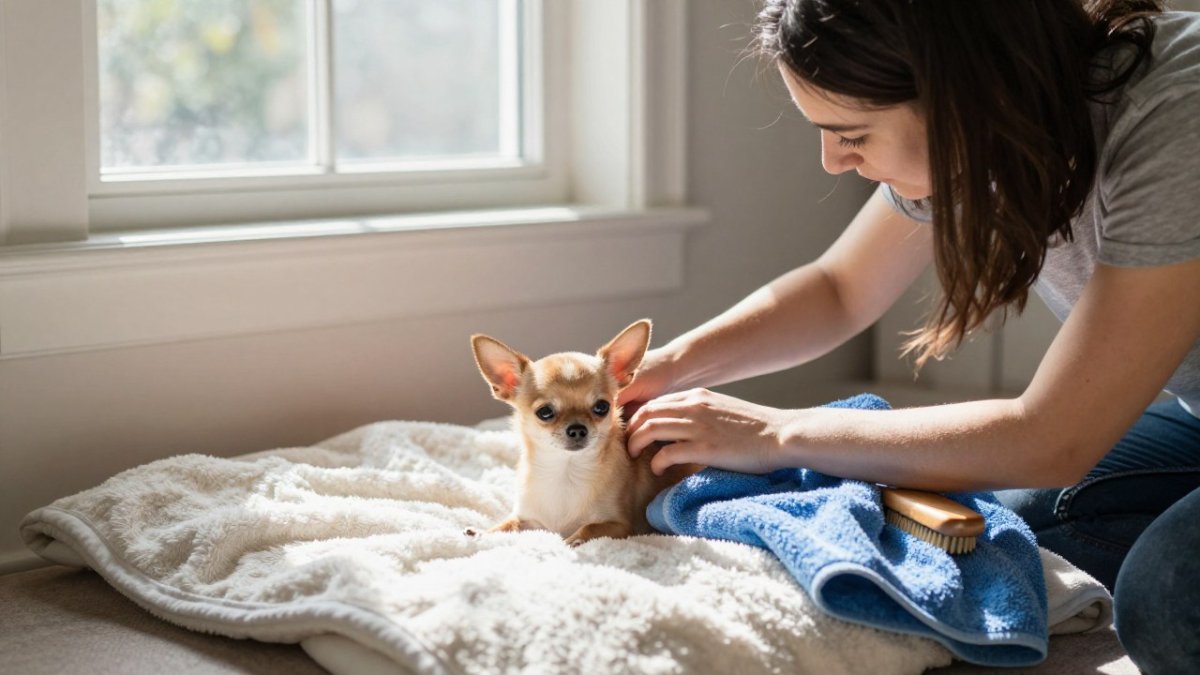
Wipe the coat with a rubber curry brush or damp cloth
Run a soft bristle brush with the grain
Check the ears and paws
Trim nails every three to four weeks
Bathe every four to eight weeks, or when the dog gets dirty
Short coats shed year-round, heavier in spring and fall. A quick rub-down every few days during those seasons keeps hair off your furniture.
One honest limitation: short coats show skin problems fast. Dandruff, redness, and dry patches are easier to spot, which is helpful. Check the belly and armpits during each session.
The Best Brush for a Chihuahua: Tools by Coat Type
The best brush for a Chihuahua depends on coat length, not brand. Long coats need a slicker brush plus a metal comb; short coats need a rubber curry brush or soft bristle brush.

Here is the side-by-side most grooming articles skip. Match the tool to the coat, then match the technique to the tool:
Tool | Best for | How to use it safely | Skip it if |
Slicker brush (fine wire pins) | Long coats, ear feathering, chest, tail | Light strokes in the direction of growth; let the pins do the work, never press into skin | Pins are bent, missing, or scratchy on your wrist |
Metal comb (medium-to-fine teeth) | Long coats, tangle checks after brushing | Comb in small sections down to the skin; if it snags, stop and work the knot loose with your fingers | Teeth are sharp or rusted |
Rubber curry brush | Short coats, lifting loose hair | Circular motions with the grain on the body; skip the face and ears | The dog has irritated or broken skin |
Soft bristle brush | Short coats, finishing and spreading oils | Short strokes with the grain after the curry brush | Bristles are stiff enough to scratch |
Nail clippers or grinder | Every coat type | Clip small amounts at the tip, avoiding the quick; grind in short touches, not long holds | You cannot see the quick or the dog is panicking |
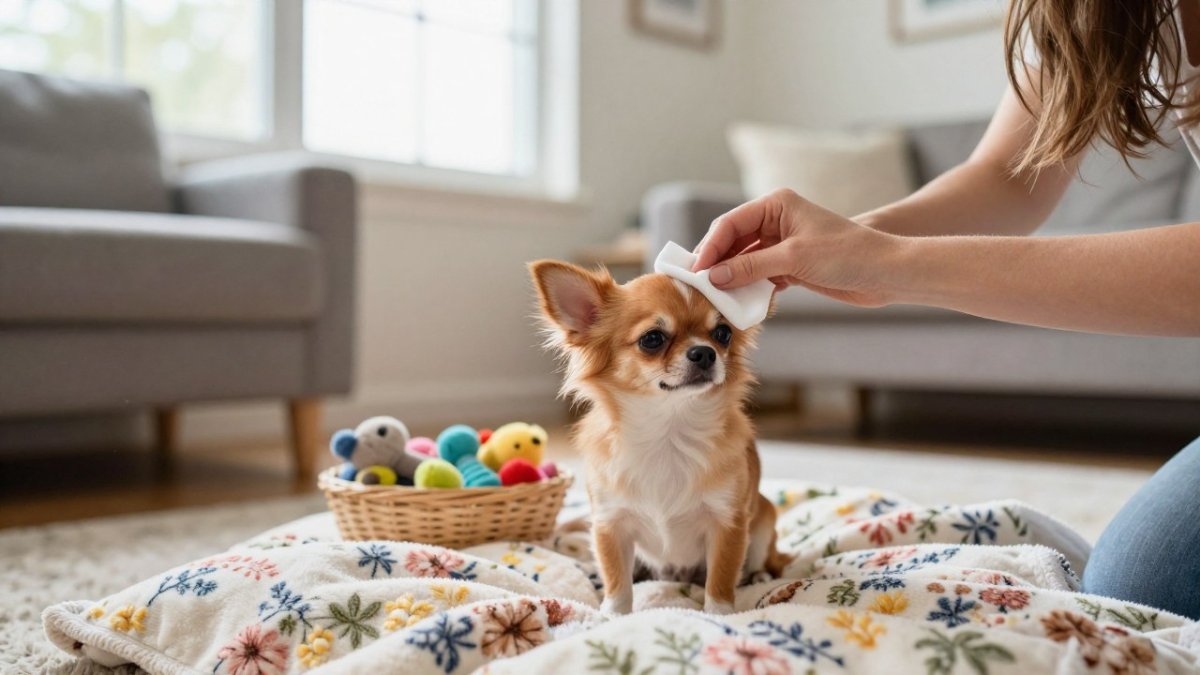
Damp cloth | Ear flaps and outer ear | Wipe visible dirt only; never push into the ear canal | There is discharge, odor, or head shaking |
A few tool rules that save coats:
Do not use a human hairbrush. The bristles are too stiff for a Chihuahua's thin skin and drag instead of gliding.
Do not press hard with a slicker brush. Light strokes work better; if the brush snags, stop and work the tangle loose with your fingers first.
Do not skip the comb. The comb is the honesty check, it finds what the brush missed, especially behind the ears and under the front legs.
Do not share tools between a long coat and a short coat without cleaning them; loose undercoat transfers and can speed matting on the long-coated dog.
For short coats, two tools suffice: a curry brush and a soft bristle brush. For long coats, the slicker and comb are non-negotiable, and rounded-tip scissors belong in the kit for paw-pad and rear trims.
A comfortable collar makes grooming sessions easier, since you can hold the dog steady without gripping the neck. You can shop Dreamers Pups collars sized for Chihuahuas and small dogs.
Pro Tip Buy one tool at a time and test it on the back of your own hand first. If it scratches you, it will scratch a Chihuahua.
Can You Shave a Long-Haired Chihuahua?
No, you should not shave a long-haired Chihuahua. The coat insulates against heat and cold, and shaving removes that protection.
The double coat traps a layer of air against the skin that keeps the dog cool in summer and warm in winter.
If your goal is a cooler dog, try these instead:
Brush out the undercoat so air moves through
Keep water available and offer shade
Walk in the early morning or evening
Use a cooling mat indoors
A trim is different from a shave.
Watch out: clippers used close to the skin on a double coat can cause clipper burn and leave the coat growing back uneven for months.
Bathing, Mat Prevention, and Trimming at Home
Bathing frequency depends on coat type and lifestyle. Long coats need a bath every four to six weeks.
Use a dog-specific shampoo and lukewarm water. Work it in, rinse thoroughly, and towel dry.
Here is the coat-specific schedule most articles never lay out side by side:
Task | Long coat | Short coat |
Brushing | 3-4 times a week, daily on ears, chest, and under front legs | Once a week, 5-10 minutes |
Comb check | After every brushing session | Not needed |
Bath | Every 4-6 weeks, or when dirty or greasy | Every 6-8 weeks, or when dirty |
Full dry after bath | Required, damp undercoat mats | Towel dry is enough |
Nail trim | Every 3-4 weeks | Every 3-4 weeks |
Ear check | Weekly | Weekly |
Trim feathering | Paws, rear, and belly every 4-6 weeks | Not needed |
Mat prevention comes down to three habits:
Brush problem spots every day, not once a week
Comb after every bath, once the coat is fully dry
Trim the feathering around the rear so waste doesn't cling
For trimming at home, use rounded-tip scissors and work in small snips, never cutting toward the skin.
Watch Out Do not shave a long-coated Chihuahua to reduce grooming. The double coat insulates against heat and cold, and shaving removes that protection and can leave the coat growing back patchy. A tidy trim is not a shave.
Coat and skin cautions worth knowing:
Redness, flaking, or constant scratching after a bath usually points to a shampoo issue. Switch to a fragrance-free puppy shampoo and give the skin a week to settle.
A mat that will not loosen with fingers and a comb should not be cut out with scissors near the skin. A groomer can remove it safely.
Fleas and ticks hide in long feathering and in the armpits of short coats. Check both areas weekly during warm months.
Dry patches on the belly and armpits show up fast on short coats, that is helpful, not a problem. Note them and mention them at the next vet visit.
For general coat and skin guidance, the ASPCA pet care library covers safe grooming products and what to avoid on sensitive skin.
Key Takeaway Long coat: brush often, comb after baths, trim feathering, never shave. Short coat: brush weekly, bathe less, and watch the skin. Same dog, two different routines.
Grooming a Chihuahua Puppy: Start Early, Adjust for Age
Start grooming a Chihuahua puppy the week you bring it home. Short, gentle sessions build tolerance fast.
Keep early sessions to two or three minutes. Touch the paws, ears, and tail without doing much. Praise and stop before the puppy gets restless.
Age changes the routine:
Puppies: short daily handling, soft brush only
Adults: full brushing schedule by coat type
Seniors: gentler strokes, more frequent checks for skin lumps and dryness
Senior Chihuahuas often develop thinner coats and drier skin, so use a softer brush and mild shampoo. Keep sessions short and support the body with your free hand.
Bringing Home a Chihuahua Puppy From Dreamer's Pups
Bringing home a Chihuahua puppy from Dreamer's Pups means you get a pup raised in a home environment among family. For more guidance, see our guide to finding a healthy puppy near me.
We've diversified our lines with breeders from the east coast to the west, ensuring that our lines are never bred too close.
We are also more than willing, if anything congenital were to arise, to replace the puppy in accordance with our 1 year congenital health guarantee.
Choosing the right grooming routine for a long-haired or short-haired Chihuahua comes down to matching tools and frequency to the coat in front of you.
Frequently Asked Questions
Can you shave a long-haired Chihuahua in summer?
You can, but it is rarely the best choice. A long-haired Chihuahua's coat insulates against heat and protects the skin from sun. Clipping the coat short, rather than shaving to the skin, keeps the dog cooler without stripping that protection. If the coat is matted beyond brushing, a professional groomer can clip it down safely and the hair grows back. For routine summer grooming, brush more often and bathe as needed instead of shaving.
How often should you brush a short-haired Chihuahua?
Once or twice a week is enough for most short-haired Chihuahuas. Use a rubber curry brush or a soft bristle brush to lift loose hair and distribute skin oils. During seasonal shedding, switch to every other day and add a fine-toothed comb for the undercoat. Short coats tangle far less than long ones, so the goal is shedding control and skin health rather than detangling.
What is the best brush for a Chihuahua with a long coat?
A slicker brush for the body and feathering, plus a metal comb to check for tangles near the skin. Brush in small sections, starting at the legs, ears, and tail where mats form first. A detangling spray helps on stubborn spots. Skip human hairbrushes, which glide over tangles instead of separating them, and never pull a mat out with force.
How do I prevent mats in a long-haired Chihuahua's coat?
Brush three to four times a week, and daily behind the ears, under the front legs, and around the tail where friction causes mats. Bathe every three to four weeks with a dog shampoo, then dry thoroughly and comb while the coat is still slightly damp. Keep the feathering on the legs and belly trimmed short if your dog picks up burrs or gets wet often.
Comments