
7 Steps to Remove Tear Stains From Chihuahuas
Quick Summary
To remove tear stains from a Chihuahua, clean the area around the eyes every day with warm water and a soft cloth, wiping from the inner corner outward. Keep the fur dry afterward, and trim any fur that holds moisture. Consistent cleaning fades existing stains and keeps new ones from building up.
Tear stains form when tears oxidize on facial fur, darkening it over time.
Use warm water and a soft cloth, not hot water or harsh soaps.
Wipe from the inner corner of the eye outward, following fur growth.
Dry the fur well afterward, because damp fur makes staining worse.
See a vet for thick discharge, redness, squinting or cloudy eyes.
Want a Clean-Faced Chihuahua From Day One?
Dreamer's Pups raises family-raised Chihuahua puppies ready for a clean, healthy start at home.
Table of Contents
Why Chihuahuas Get Tear Stains
Tear stains are the reddish-brown marks that form under a Chihuahua's eyes when tears spill onto the facial fur. Chihuahuas have large, prominent eyes and short muzzles, which can make tears drain poorly and run down the face.
The stain comes from porphyrins, pigments found in tears. When tears sit on the fur, the pigment oxidizes and darkens. Light-colored coats show this most clearly, but any tear stains can build up over time if they are not cleaned.
Common causes include:
Narrow or blocked tear ducts
Irritation from dust, pollen or dry air
Eye discharge that stays on the face
Diet and water quality, which some owners believe play a role
Knowing the cause helps you pick the right cleaning routine.
Step-by-Step Routine to Clean Your Chihuahua's Eyes
A simple daily routine works better than occasional deep cleaning. Because Chihuahuas are small and their eyes sit forward and prominent, the routine needs a little more care around positioning and hand placement than it would for a larger, longer-muzzled dog.
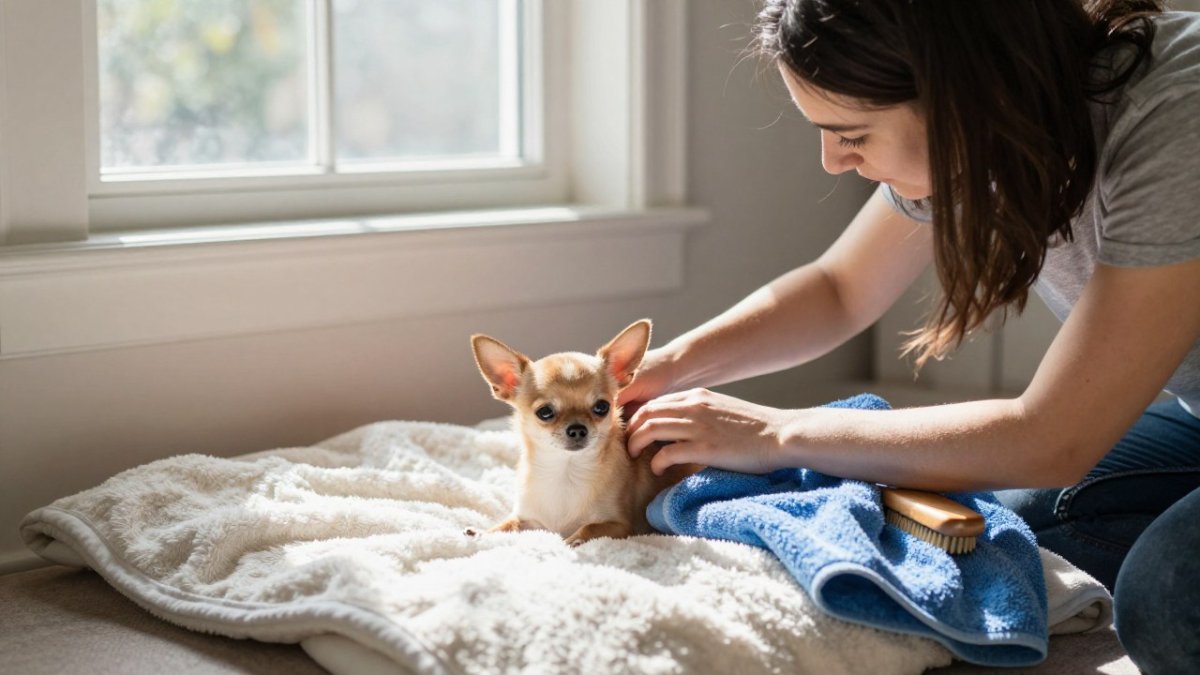
Gather your supplies before you start. You want a soft cloth, a separate dry towel, a few cotton balls, and a small bowl of warm water within reach so you never have to let go of your dog mid-wipe.
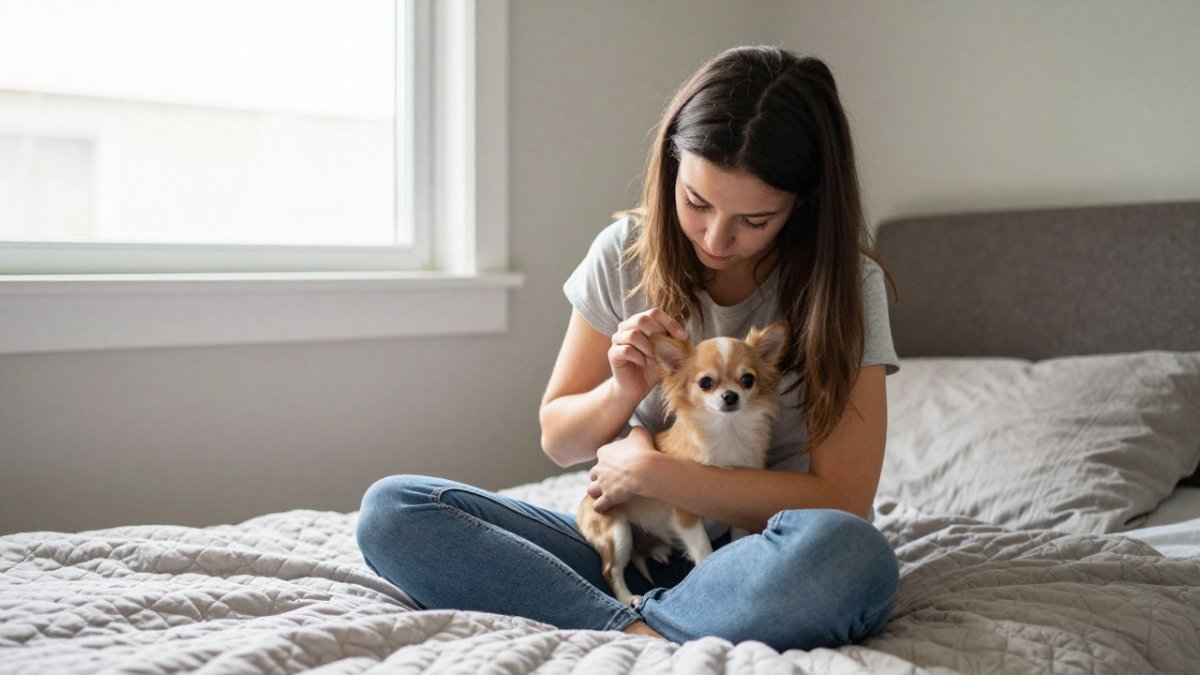
Settle your Chihuahua first. Sit on the floor with your dog in your lap or beside you, back against your chest, so the head is steady and you are not reaching over the face. A small dog held loosely on a table is more likely to twist away and get poked.
Wet a soft cloth with warm water, comfortably warm to your wrist, not hot.
Wring the cloth out so it is damp, not dripping. Water running into the eye is the most common mistake in this routine.
Gently wipe from the inner corner of the eye outward, following the direction the fur grows. Use a fresh section of cloth for each pass.
Use a clean section of cloth or a fresh cotton ball for each eye, so you never carry discharge from one eye to the other.
Pat the fur dry with a separate towel. Damp fur under the eye holds moisture and makes staining worse.
Check the eyes for redness, swelling or heavy discharge before you finish, so you catch changes early.

What You Need: Warm Water, Soft Cloths and Cotton Balls
Keep the supplies simple. Warm water is gentle on the eye area and works well for most daily cleaning. Soft cloths, such as microfiber or cotton flannel, are easy on delicate skin. Cotton balls are useful for working around the eyes without rubbing hard.
Avoid harsh soaps and strong cleaners near the eyes. Plain water is often enough for daily upkeep. If you use cotton balls, use a fresh one for each wipe and throw it away after use, a reused cotton ball is just a way to spread discharge across the face.
Watch out: never touch the eyeball itself. Wipe only the fur and the skin around the eye, and stop if your Chihuahua squints or pulls away, because that can be a sign of irritation or a scratch.
Wiping Technique Around the Eyes
Wipe slowly and lightly. Rubbing can irritate the eyes and the skin around them. Work from the inside corner of the eye toward the outside. This keeps debris from moving toward the tear duct and matches the way tears naturally drain.
For a Chihuahua, the tricky part is the short muzzle: the fur between the eye and the nose sits close to the eye, so use the pad of your finger behind the cloth rather than a fingertip, and keep your nail away from the skin. Dry the fur well afterward, because damp fur can hold bacteria and make staining worse.
If the fur is crusted, hold the damp cloth against the crust for about a minute to soften it before wiping. Pulling at a dry crust can tug the skin and leave a raw spot that stains more.
Removing Existing Stains From Facial Fur
Older stains take more patience. Begin by softening the crust with a warm, damp cloth and holding it gently against the fur for a minute. Then wipe the stained area in the direction the fur grows.
For stubborn marks, some owners use a pet-safe tear stain product. Test any product on a small patch first, and keep it away from the eyes. A regular grooming routine is the best way to fade stains over several weeks.
Stains may not disappear completely, especially on very light coats. Consistent cleaning keeps them from getting darker.
Choosing a Chihuahua Tear Stain Remover
Look for products made for dogs and labeled as gentle on the eye area. Read the ingredient list and avoid strong fragrances, alcohol and harsh bleaching agents. Check whether the product is meant for facial use and whether it is safe for regular daily use.
Cleaning wipes can be convenient, but plain warm water and a soft cloth often work just as well. If you use a product, follow the label and stop if your dog shows irritation.
Check the product label and your local pet store for current options.
Is Hydrogen Peroxide Safe for Tear Stains?
Hydrogen peroxide is a common home remedy, but it can irritate the eyes and sensitive skin around them. A veterinarian should advise you before you try any remedy near the face.
Safer options include warm water, gentle wiping and a pet-safe product made for facial use. If you are unsure about a remedy, ask your vet first.
How to Prevent Tear Stains in Dogs
Prevention depends on keeping the face clean and dry. Wipe away discharge as soon as you notice it, and dry the fur after walks, meals and bath time. Beyond that, it helps to separate the measures that reliably reduce staining from the ones that are mostly owner folklore, so you spend your effort where it counts.
Measures that commonly help:
Trim the fur around the eyes so it does not rub or trap moisture.
Use a bowl that keeps food and water off the face where possible.
Wash your dog's bedding regularly.
Keep up a daily cleaning habit. Consistency matters more than any single product.
Keep the hair between the eye and the nose trimmed.
Measures where the evidence is thin:
Water quality. Some owners try filtered or bottled water, but there is no consistent evidence that water source is a cause of staining. If you try it, change one thing at a time.
Diet and supplements. Some owners report changes after switching food or adding a supplement, but results vary from dog to dog and are hard to separate from normal coat changes. Talk to your vet before adding anything, especially in a small breed where portion size matters.
Wiping with home remedies. Many popular mixtures are harsher than plain warm water and can irritate the skin around the eye.
A realistic expectation helps here. Stains that have already soaked into the fur may not lift completely with cleaning, especially on light coats. In those cases, trimming the stained fur and letting it regrow is often faster than repeated scrubbing, and it gives you a clean start for the daily routine. If staining keeps returning despite good hygiene, or comes with redness, squinting or heavy discharge, that points to a cause a vet needs to check rather than a cleaning problem.
When to See a Vet for Dog Eye Discharge
Some discharge is normal, but certain signs need a veterinarian. Call your vet if your Chihuahua has:
Thick yellow or green discharge
Redness, swelling or squinting
Cloudiness on the eye surface
Pawing at the face or rubbing the eyes
Tears that keep running despite regular cleaning
Chihuahuas can have eye problems that need professional care, so do not wait if symptoms last or get worse. A vet can check the tear ducts and rule out infection.
Keeping Your Chihuahua's Eyes Clean From Day One
Starting a cleaning routine early makes it part of normal life. Puppies get used to gentle wiping when it is done calmly and often. Puppies raised in a family home are used to gentle handling, which makes a clear routine easy to start from the first week.
Make the routine short, calm and regular. Praise your puppy during each session. Over time, the fur stays cleaner, stains stay lighter, and cleaning becomes quick and easy.
Frequently Asked Questions
How do you safely remove tear stains from a Chihuahua?
Wipe the area under the eyes with a soft cloth or cotton ball dampened in warm water, working from the inner corner outward. Dry the fur afterward so moisture does not sit against the skin. Avoid rubbing hard near the eye itself, and keep cleaning gentle and consistent rather than aggressive. Daily wiping is usually enough to keep new staining from building up, while existing stains typically fade gradually as the fur grows out and stays clean.
Can I use hydrogen peroxide to remove dog tear stains?
Some owners use a very diluted hydrogen peroxide solution on facial fur, but it is not a risk-free choice around the eyes. Any product that could drip into the eye or irritate the skin should be avoided. Warm water and a soft cloth are the safer default. If you are considering any commercial or home remedy near the eyes, ask your veterinarian first, especially if your Chihuahua has sensitive skin or existing eye irritation.
How often should I clean my Chihuahua's eyes?
A quick daily wipe of the area under the eyes is the most practical routine for most Chihuahuas. Daily cleaning removes the moisture and debris that help stains set. Dogs that tear heavily may need a second wipe during the day. Keep the fur around the eyes dry after cleaning, since damp fur is more likely to darken and crust.
When should I take my Chihuahua to the vet for watery eyes?
Occasional tearing is normal for many Chihuahuas, but see a veterinarian if the discharge becomes thick, yellow or green, if the eye looks red, swollen or painful, or if your dog squints, paws at the eye or seems uncomfortable. Constant excessive tearing that does not improve with routine cleaning also warrants a visit, since it can signal an eye problem or a blocked tear duct that needs professional care.
Comments