
How to Keep a Puppy Calm at the Vet Without Stress
Last Updated: November 19, 2026
Quick Summary
To keep a puppy calm at the vet, practice gentle handling at home a week ahead, pack soft treats and a home-scented towel, and reward during each exam step rather than after. If your puppy refuses treats, it is past its limit, so pause the exam, move to a quieter spot, or reschedule the non-urgent parts.
Watch for a tucked tail, flattened ears, lip licking, yawning, and a stiff stance as early fear signals.
Hold a paw for two seconds, then treat, and repeat daily for a few minutes.
Drive with the windows partly down and skip a heavy meal in the hour before you leave.
Reward during the scary thing, not after it, because a treat given three seconds late teaches nothing.
Give a quiet space, fresh water, and a chew for the first hour home after the visit.
Ready for a calm, confident Chihuahua?
Dreamer's Pups raises socialized Chihuahua puppies in a family home, with health records and a one-year guarantee.
Table of Contents
Why Puppies Shake and Stress at the Vet (and Why It's Fixable)
A trembling puppy in a clinic waiting room is not a bad dog. It is a dog reacting to strange smells, loud noises, and unfamiliar hands. The good news: this response is learned, which means it can be unlearned. Knowing how to keep a puppy calm at the vet starts long before you walk through the clinic door.
At Dreamer's Pups, we raise our Chihuahua puppies in a busy family home, around children and everyday household noise. Still, every puppy needs practice. The American Veterinary Medical Association's guidance on low-stress handling points to the same idea: calm visits are built, not born.
Reading Your Puppy's Fear Signals Before They Escalate
Fear signals show up in the body first. Watch for a tucked tail, flattened ears, lip licking, yawning, and a stiff stance. A puppy that freezes is not being good. It is shutting down.
Catch these signs early and you can act before a shake turns into a panic. Our full guide on Chihuahua body language walks through each signal in detail, which helps you respond at the first hint of worry rather than the tenth.
Puppy First Vet Visit Tips: Build Calm Before You Arrive
Preparation beats reassurance on the day. A puppy that has already practiced handling and car rides arrives with less to fear.
Start a week ahead. Keep sessions short and end on a good note.
Gradual Handling Practice for Paws, Ears, Mouth, and Belly
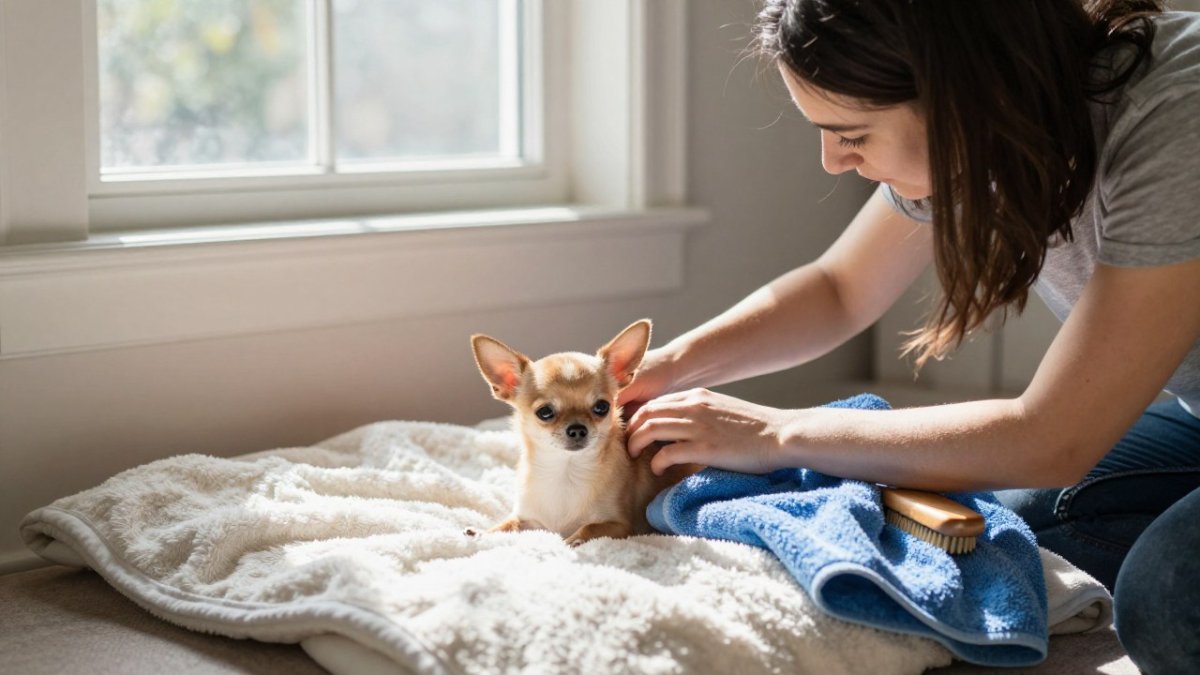
Touch your puppy the way a vet will, but gently and briefly. Pair every touch with a treat.
Hold a paw for two seconds, then treat
Lift an ear flap, look inside, then treat
Gently open the mouth, then treat
Run a hand along the belly, then treat
Do this for a few minutes a day. A common mistake is rushing this step. Slow wins here.
Your Puppy Vet Visit Checklist for a Low-Stress Appointment
Pack for calm, not just for convenience. A prepared bag removes scrambling in the parking lot, and scrambling feeds a puppy's nerves.
Soft treats your puppy loves
A favorite chew or frozen food toy
A secure carrier or crate
A leash and well-fitted harness
A towel that smells like home
Health records from your breeder
A list of questions for the vet
Our own puppies leave with worming and vaccination records fully documented, so you have that paperwork ready to hand over.
Step-by-Step: The First Appointment From Car to Consultation Room
The first visit sets the tone for every visit after it. Keep it short, calm, and reward-heavy from start to finish. The plan below assumes a healthy puppy coming in for a wellness check or a scheduled vaccine, not a sick visit.

Drive with the windows partly down. Fresh air settles many puppies. Keep the carrier secured so it cannot slide, and skip a heavy meal in the hour before you leave.
Park and wait a few minutes. Let your puppy relax before you go in. This is also the moment to check that you have records, treats, and a leash within reach.
Call ahead if your clinic allows it. Many let you wait in the car and text when the room is ready. Ask when you book whether curbside check-in is an option.
Carry or lead your puppy in calmly. No tugging, no rushing. If your puppy is small enough to carry in a carrier, keep the carrier covered on one side so it has a visual retreat.
Check in with your puppy settled, not in your arms in a crowd. Ask the front desk whether you can wait in a quieter spot. Most practices will accommodate this if you ask.
Let your puppy sniff the consultation room. Give it a minute. Set the carrier down open and let the puppy choose when to step out.
Hand over treats during the examination. Feed while the vet checks ears and paws. If your puppy will not take food, that is information, see the section below on what to do when treats stop working.
Ask the vet to narrate. A technician or veterinarian who talks through each step gives you a cue for when to feed and when to pause.
Leave on a high note. Treat and praise before you exit, and let your puppy walk out rather than be scooped up if it is willing.
Watch out: a puppy that is panting hard, freezing, or trying to climb up your arm is past the point where a treat will help. Pause the exam, ask for a break, or step back into the car and reschedule the non-urgent parts.
If your puppy is coming in for a vaccine rather than a full exam, tell the front desk when you book.
Positive Reinforcement and Counterconditioning That Actually Work
Counterconditioning means changing how your puppy feels about the clinic. You pair something scary with something good, again and again, until the good feeling wins.
Positive reinforcement is the tool. Soft treats, praise, and a favorite chew all work. The trick is timing: reward during the scary thing, not after it.
Treat while the scale wobbles
Treat while the stethoscope touches the chest
Treat while the vet lifts a paw
What most guides miss is that the reward must come fast. A treat given three seconds late teaches nothing.
Dog Shaking at the Vet: What to Do When Treats Stop Working
A puppy that refuses treats is past its limit. Stop pushing. That is the signal to change the plan, not to try harder.
Here is what we would do:
Move to a quieter corner or back to the car
Lower the intensity: ask the vet to pause
Try a higher-value reward, like a lick mat
Shorten the visit and reschedule the rest
Never force handling on a shut-down puppy. If your puppy seems unwell rather than just scared, call your vet for guidance. Medication is a decision for your veterinarian, not a do-it-yourself fix.
How to Calm a Puppy After a Vet Visit and Track Progress
The visit is not over when you get home. A calm recovery cements the good work, and a simple log turns each visit into data you can use for the next one. Most guides stop at the clinic door; this is the part that decides whether visit two is easier than visit one.
The First Hour Home
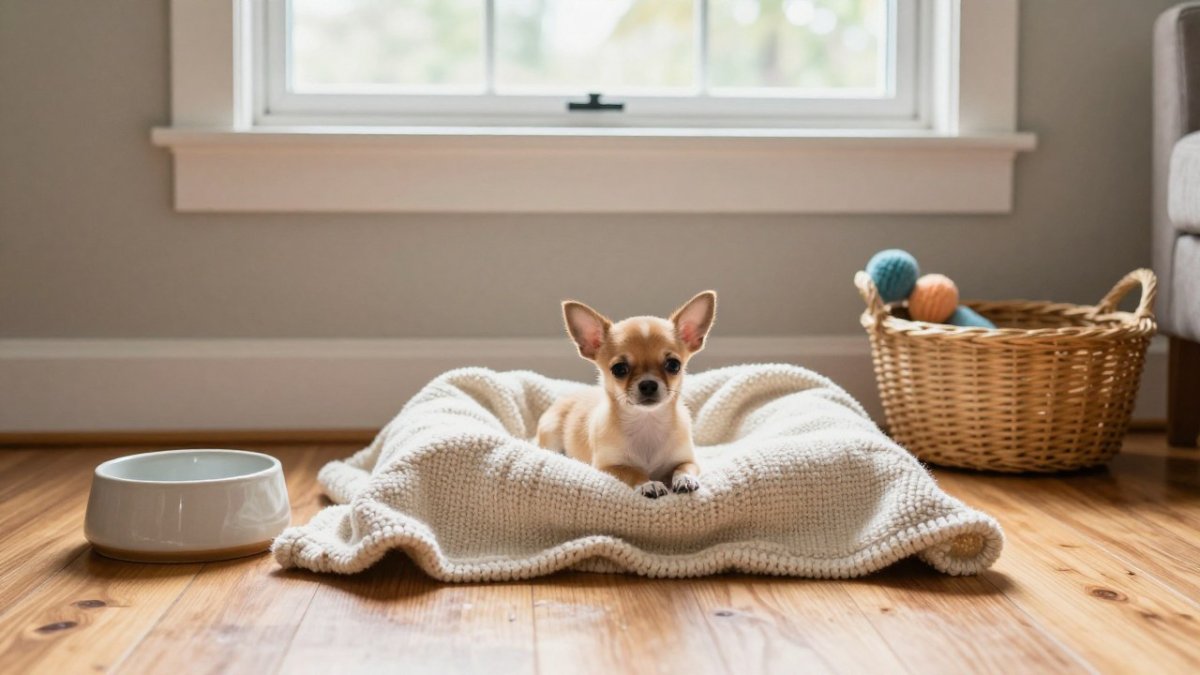
Give your puppy a quiet space, fresh water, and a chew. Skip the dog park that day, and skip visitors if you can. After a quiet day at home, keep that gentle pace when grooming comes around, and let Stephscutecrittercuts be a reminder that calm handling starts with giving your puppy time to settle.
Watch out: some puppies are more reactive the evening after a visit, not less. A puppy that snaps at a housemate or guards its bed after a clinic trip is over-aroused, not aggressive. Give space rather than correction.
What to Watch For After the Appointment
A little sleepiness after a vaccine is common. So is a mild lump at the injection site. Call your veterinarian if you see vomiting, facial swelling, hives, difficulty breathing, or a puppy that will not eat or drink by the next morning. Those are reasons to phone the clinic, not to wait and see.
A Progress Log You Will Actually Keep
A simple log helps, and it does not need to be fancy, a note on your phone works. Track the same four things each visit so you can compare:
What to Track | Why It Matters |
Fear signals seen | Shows what still needs practice |
Treats accepted | A clear gauge of stress level |
Time to settle after | Tracks progress over visits |
Handling that went well | Builds your confidence too |
Add one line for what you would do differently next time. Over three or four visits, the pattern tells you whether your puppy is improving, plateauing, or getting worse, and that is the information your veterinarian needs if you ever want to talk about a calmer plan for future appointments.
Practice Between Visits
A clinic visit is a test; the practice happens at home. Once a week, run a two-minute handling session, paws, ears, mouth, belly, the same way you did before the first appointment. Pair it with a car ride that ends somewhere fun, not at the clinic, so the car does not become a predictor of the vet. Our guide to welcoming your new puppy home covers setting up that calm space in detail.
Bringing Home a Chihuahua Puppy Ready for Calm Vet Visits
A puppy's first weeks shape how it handles the clinic for life. That is why we handle ours from day one.
Our lines are diversified with breeders from the east coast to the west, so our dogs are never bred too close.
We also keep our healthy puppies out of the vet office to avoid airborne viruses like parvovirus. Wormers, preventatives, and vaccines come through Revival Animal Health, which supplies veterinary offices.
We register with CKC, not AKC. If you are ready to add a well-socialized Chihuahua to your family, review our questions to ask before buying a puppy and our Chihuahua puppies buyer's guide first.
Bringing home a puppy is a big step, and we want it to feel simple.
Frequently Asked Questions
How can I prepare my puppy for its first vet visit?
Start about a week ahead by practicing gentle handling at home: touch the paws, lift the ears, and look at the teeth for a few seconds at a time, pairing each touch with a soft treat. Take a short car ride to somewhere fun so the car does not only mean the clinic. On the day, pack a puppy vet visit checklist with vaccination records, a favorite toy, and high-value treats, and arrive a few minutes early so you can settle rather than rush.
What can I give my dog to calm down before a vet appointment?
Do not give any over-the-counter or prescription calming product, including Benadryl, without asking your veterinarian first. Dosages depend on the puppy's weight and age, and some human medications are unsafe for dogs. If your puppy is severely fearful, call the clinic before the visit and ask whether a vet-guided plan, such as a mild anti-anxiety medication or a sedative for travel, is appropriate. Only use medication under direct veterinary guidance.
How do I calm a puppy that is shaking at the vet?
Shaking is a normal fear signal, not a sign you failed. Move your puppy to a quieter corner or back to the car if the waiting room is busy, speak in a low steady voice, and offer a lick mat or frozen food toy to give the brain something else to focus on. Ask the staff if you can wait outside until the consultation room is ready. If your puppy refuses all food and keeps shaking, tell the veterinarian so they can adjust the handling approach or suggest a follow-up plan.
How can I help my puppy settle down after a vet visit?
Plan a quiet decompression period for the rest of the day. A short sniff walk in a familiar area, fresh water, and a nap in a dim room help most puppies reset. Skip the dog park and big family gatherings right after. Over the next few days, note what went well and what triggered stress, then practice that one skill at home with treats. This tracking turns each visit into progress instead of a setback.
Comments