
Ethical Puppy Adoption Process Explained: 2026 Guide
Table of Contents
What Makes a Puppy Adoption Ethical?
Questions to Ask a Puppy Breeder Before You Commit
Red Flags That Signal an Unethical Operation
Where Your Money Actually Goes
Breeder Health Guarantee Explained: What Yours Should Cover
The Importance of Genetic Diversity in Breeding
Puppy Socialization Milestones That Shape Temperament
The First 30 Days After Pickup
Bringing Your Puppy Home: The First Two Weeks
How Dreamer's Pups Handles the Ethical Adoption Process
Conclusion
Frequently Asked Questions
Last Updated: September 25, 2026
What Makes a Puppy Adoption Ethical?
An ethical puppy adoption is a process where the breeder puts the puppy's health and temperament ahead of the sale, gives you full records, and stays available after you take the puppy home. It starts long before pickup day.
At Dreamer's Pups, we've raised Chihuahuas in our family home for more than 20 years, and the difference between an ethical breeder and a puppy mill comes down to transparency. An ethical breeder shows you where the puppies live. They answer hard questions without getting defensive. They hand over complete vetting records, and they don't disappear once the payment clears.
That last part matters more than most buyers realize. The American Kennel Club's breeder resources recommends buyers verify a breeder's practices before putting down any deposit, not after.
Here's what separates the two:
Ethical breeders raise puppies in a home, handle them daily, and keep littermates together until they're ready
Puppy mills mass-produce litters in kennels with little human contact
Ethical breeders match puppies to families by lifestyle and temperament
Puppy mills sell to whoever pays first
The ethical puppy adoption process explained here follows one core idea: you should be able to trace every step of how that puppy was raised and cared for.
Questions to Ask a Puppy Breeder Before You Commit
The right questions to ask a puppy breeder cover living conditions, records, lineage, and what happens if something goes wrong. Ask them before you pay anything.
Start with the basics:
Where are the puppies raised, and can I see that space, in person or on a live video call?
What vaccinations and wormers has this litter received, and can I see the records?
How many litters do you produce each year?
Can you tell me about the sire and dam's temperament?
What happens if the puppy has a congenital issue?
Who is your veterinarian, and can you describe your preventive care protocol?
Will you put the guarantee and the pickup terms in a written contract?
A breeder who dodges the first question is telling you something. So is one who won't let you see the mother.
Ask about genetic diversity directly. A reputable breeder should be able to explain how their lines are kept separate. We've spent two decades building relationships with breeders from the east coast to the west, which keeps our lines from ever being bred too close. That strategy has paid off: over our 20+ year history, fewer than 1% of the puppies we've sold have had reported issues.
Ask how preventive care is handled. A clean answer names the products, the schedule, and who authorizes them.
Red Flags That Signal an Unethical Operation
An unethical breeder usually reveals themselves through paperwork and pressure. Watch for these signs:
No health records, or records that look handwritten and vague
Multiple breeds and dozens of available puppies at once
Refusal to let you meet the mother or see the living space
Pressure to pay a deposit before you've asked a single question
No written contract of any kind
A breeder who won't give you a phone number or a real name
A seller who insists on meeting in a parking lot, a rest stop, or a third-party location instead of their home
A listing that uses rescue language ("rehoming," "adoption fee," "owner surrender") but the same seller appears behind dozens of unrelated litters
A price that changes based on how fast you commit
Watch Out If a breeder won't let you see where the puppies are raised, walk away. That single refusal is the most reliable sign of a commercial operation hiding its conditions. Where Your Money Actually Goes A fair question every buyer should ask is what the price covers. With a responsible breeder, the number reflects real costs: preventive care for the dam and the litter, wormers and vaccines, food and supplies for weeks of raising, and the time spent socializing and matching puppies to homes. With a broker or a laundering operation, the same number mostly reflects markup, and the puppy's care history is often a blank page. Breeder Health Guarantee Explained: What Yours Should Cover A breeder health guarantee is a written promise that the breeder will stand behind the puppy if a congenital condition appears within a set window. It should be in writing, with a clear time frame. What a solid guarantee should spell out: The exact length of coverage What counts as a covered condition What the breeder will do: replace, refund, or cover treatment What the buyer must do to keep the guarantee valid, such as a vet visit after pickup The Importance of Genetic Diversity in Breeding Genetic diversity in breeding means pairing dogs from unrelated lines so that harmful recessive traits don't stack up across generations. When two closely related dogs are bred, the risk of congenital problems climbs. Puppy Socialization Milestones That Shape Temperament Puppy socialization milestones are the early experiences that decide how a dog handles people, noise, and new places for the rest of its life. The window closes fast, usually by around 12 to 16 weeks. What happens in that window, and what doesn't, is one of the clearest differences between a home-raised puppy and a kennel-raised one. Submit → A young child gently pets a calm Chihuahua puppy during ethical puppy adoption socialization at home. Here's the rough timeline a responsible breeder works against: Weeks 3-5: Gentle daily handling begins. Puppies get used to human hands, being picked up, and being separated briefly from littermates for one-on-one attention. Weeks 5-8: Household sounds, different floor surfaces, car rides, and calm introductions to friendly adult dogs. This is also when most breeders start potty-pad or outdoor potty routines. Weeks 8-12: The puppy goes home. New people, new routines, short positive training sessions, and exposure to the outside world in low-risk ways. Weeks 12-16: The window starts to close. Whatever the puppy hasn't been gently exposed to by now will take far more work later. Key milestones to ask about: Handling: daily gentle touch from birth onward Sounds: household noise, from blenders to TV People: men, women, children, and strangers Surfaces and spaces: carpet, tile, stairs, car rides Other animals: calm, vaccinated adult dogs The First 30 Days After Pickup Most guides stop at the car ride home. The first month is where socialization either continues or stalls, so plan it out before pickup day. Ask your breeder for the full preventive care schedule in writing before pickup. You'll hand it to your own vet, and it saves you from guessing what's already been given. Socialization isn't a checklist you finish in week one. It's a 12-to-16-week project, and the first 30 days at home are the most important stretch of it. Bringing Your Puppy Home: The First Two Weeks The first two weeks at home are about decompression, routine, and low-stress bonding. Keep things quiet and predictable. Before pickup, prep your home: Set up a small, safe space with a bed and water Puppy-proof cords, plants, and small objects Pick one potty spot and stick to it Stock the same food the breeder uses Book a vet visit for the first week Ask your breeder for the full preventive care schedule in writing before pickup. You'll hand it to your own vet, and it saves you from guessing what's already been given.
How Dreamer's Pups Handles the Ethical Adoption Process
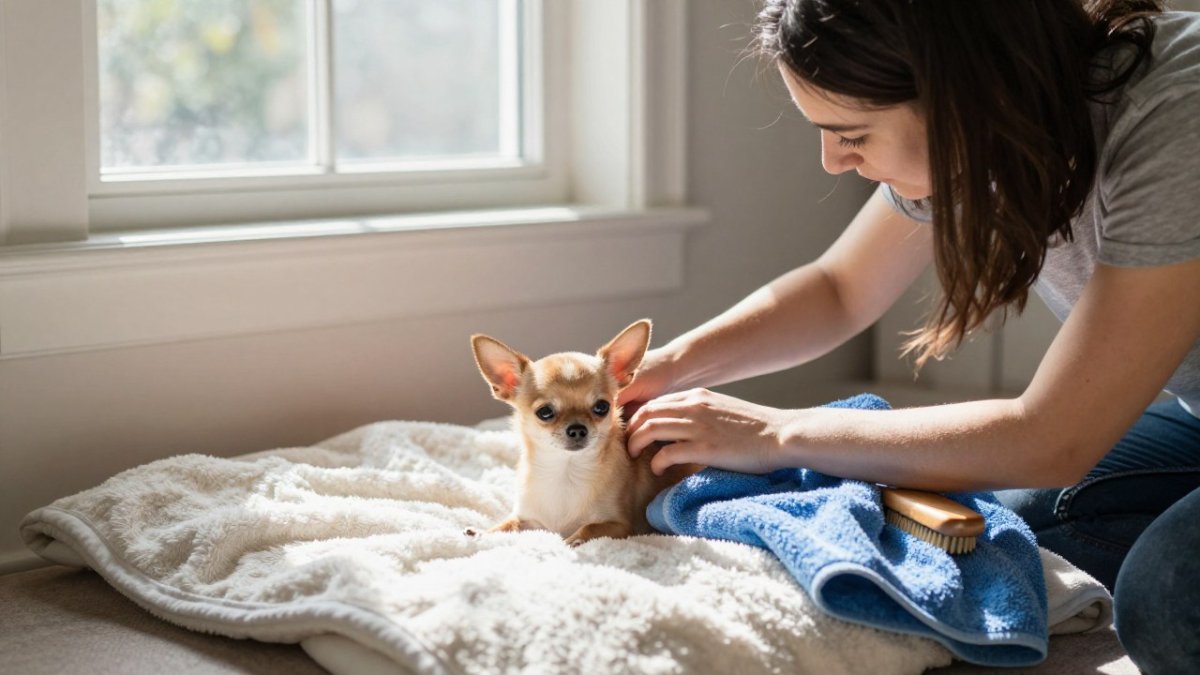
We're a hobby breeder, not a commercial kennel. Every Chihuahua puppy we place is raised in our home, among our family, and socialized from day one.
Here's what that means for you:
Full records. Every puppy comes wormed and vaccinated, with each preventive treatment documented in a complete health record.
A one-year congenital guarantee. If a congenital issue arises, we replace the puppy.
Diverse lines. We work with breeders from the east coast to the west so our lines never breed too close. Fewer than 1% of the puppies we've sold over 20+ years have had reported issues.
We travel to meet families. We'd rather drive than ship a puppy in cargo. It takes a little planning, but it means your puppy meets you in person.
Support after pickup. House-training questions, feeding questions, first-week nerves: reach out. We answer.
Conclusion
Finding a breeder you can trust takes more work than clicking "buy" on the first listing you see. Ask the hard questions, get the guarantee in writing, and insist on seeing where the puppy was raised.
Frequently Asked Questions
What questions should I ask a breeder before adopting?
Ask how the puppies are raised, how many litters the breeder produces per year, whether both parents are on site, and what health records come with the puppy. Request the full vaccination and worming schedule, and ask what happens if a congenital issue appears after you bring the puppy home. A breeder who welcomes these questions and answers them in detail is a strong sign you are dealing with an ethical puppy adoption process. Evasive answers or pressure to decide quickly are reasons to walk away.
What does a breeder health guarantee actually cover?
A breeder health guarantee sets out what the breeder will do if a puppy develops a congenital condition within a defined window, usually one year. The strongest guarantees offer a replacement puppy rather than a partial refund. Read the terms before you pay: you want to know the covered conditions, the time limit, and whether you must return the puppy. A guarantee with clear, written terms is one of the clearest signs of a breeder who stands behind their lines.
What is the difference between a hobby breeder and a commercial kennel?
A hobby breeder raises a small number of litters in a home, with puppies living among family members from birth. A commercial kennel produces puppies at volume, often in separate facilities with limited human contact. The practical difference shows up in temperament and house-training. Puppies raised in a home hear household sounds, meet children, and start crate and potty routines early. Ask how many litters the breeder had in the past year; a handful suggests a hobby breeder, dozens suggests a commercial operation.
How does a responsible breeder handle puppy socialization?
Responsible breeders keep puppies with their mother and littermates until at least eight weeks, then introduce household sounds, different floor surfaces, gentle handling, and visitors during the key socialization window that runs to about sixteen weeks. Ask what the puppy has already been exposed to before pickup. A puppy that has met children, heard vacuum cleaners, and ridden in a car handles the transition to a new home with far less stress than one raised in isolation.
Submit
Comments