
Post Adoption Support for Chihuahua Owners: 2026 Guide
Table of Contents
Why Post Adoption Support Matters for Chihuahua Owners
The 3-3-3 Rule for Adopted Dogs: Your First 90 Days
Days 1-3: Decompression Mode
Weeks 1-3: Settling Into Routine
Months 1-3: Real Personality Emerges
Chihuahua Separation Anxiety Tips That Actually Work
Build Alone Time in Small Increments
House Training Stubborn Chihuahuas Without the Power Struggle
Why Chihuahuas Resist Potty Training
Building Trust With a Shy or Fearful Chihuahua
When to Call a Professional Trainer
Frequently Asked Questions
Last Updated: September 21, 2026
Why Post Adoption Support Matters for Chihuahua Owners
Bringing home a rescued or rehomed Chihuahua is not the finish line, and post adoption support for Chihuahua owners begins the moment the dog walks through the door. It is the starting line, and the first 90 days often decide whether the placement sticks. Post adoption support for Chihuahua owners is the structured help, routine, and patience a new owner provides during that adjustment window, and it matters because Chihuahuas bond intensely and decompress slowly.
This guide from Dreamer's Pups covers the timeline, the training battles, and the fear work that most new owners underestimate.
A Chihuahua that hides under the couch for a week is not broken. It is behaving exactly like a small dog that just lost everything familiar. The American Society for the Prevention of Cruelty to Animals adoption resources notes that transitions stress dogs at every age, and small breeds with strong attachment patterns feel it sharply.
What separates a smooth transition from a surrender comes down to three things: realistic expectations, a consistent routine, and knowing when to call in help.
Here is what matters most before you start.
Key Takeaway The single biggest predictor of a successful Chihuahua adoption is not the dog's temperament. It is whether the owner adjusts the environment before adjusting the dog.
The 3-3-3 Rule for Adopted Dogs: Your First 90 Days
The 3-3-3 rule for adopted dogs divides the transition into three phases: three days of decompression, three weeks of settling into routine, and three months before a dog's real personality emerges. The framework is a guideline, not a stopwatch, but it gives new owners a realistic map.
Most people quit on day four, right when the dog is still in survival mode.
Days 1-3: Decompression Mode
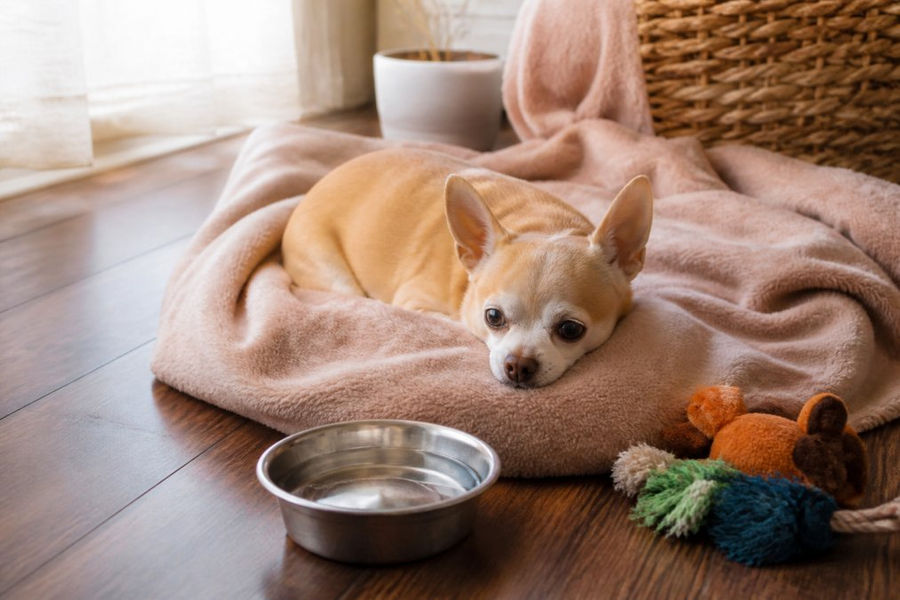
During the first three days, expect very little. A newly adopted Chihuahua may refuse food, hide, shake, or freeze entirely. This is not a personality flaw; it is a nervous system responding to total change.
Keep the environment quiet. Limit visitors. Skip the long welcome party and the photo shoot. Offer food, water, and a safe hiding spot, then let the dog come to you.
Weeks 1-3: Settling Into Routine
By the end of week one, most Chihuahuas begin testing the routine. They learn when meals arrive, when the door opens, and which couch is theirs. Predictability does more for a nervous dog than affection does at this stage.
A common mistake is switching food, beds, and schedules all in the first week. Change one variable at a time.
Months 1-3: Real Personality Emerges
Around the two-month mark, the dog you thought you adopted often disappears and a bolder, funnier, more opinionated one shows up. This is the phase where guarding, barking, and boundary-testing tend to surface.
The American Veterinary Medical Association pet behavior guidance points out that behavior problems are a leading reason pets are rehomed, which is why this window deserves the most attention, not the least.
Chihuahua Separation Anxiety Tips That Actually Work
The most effective Chihuahua separation anxiety tips focus on gradual exposure rather than dramatic goodbyes. Chihuahuas are bred for companionship, which makes alone time genuinely difficult for many of them. The fix is repetition in tiny doses, not longer absences.
Build Alone Time in Small Increments
Start with seconds, not hours. Step out the door, return, and repeat. Then extend to a minute, then five. Pair every departure with something the dog only gets when you leave, such as a stuffed food toy.
What most guides miss is the exit ritual. A long, emotional goodbye teaches the dog that your leaving is a big event worth panicking about. Leave quietly and return calmly.
Practice departures when the dog is already tired
Keep arrivals low-key for the first ten minutes
Avoid punishing whining; it deepens the anxiety
Track progress in days, not hours
If the dog cannot eat or settle at any point during practice, the step is too big. Shrink it.
Watch Out Crating a Chihuahua with severe separation anxiety without gradual conditioning often makes the behavior worse, not better. A dog that panics in a crate can injure itself trying to escape.
House Training Stubborn Chihuahuas Without the Power Struggle
House training stubborn Chihuahuas works best when you remove the fight entirely. Chihuahuas are not defiant; they are small, sensitive, and often cold, which makes indoor accidents a comfort and logistics problem more than a discipline one.
Why Chihuahuas Resist Potty Training
Three factors drive most setbacks. First, tiny bladders need far more frequent trips than owners expect. Second, cold or wet weather makes outdoor potty breaks genuinely unpleasant for a small, thin-coated dog. Third, many owners miss early signals because a Chihuahua's cues are subtle.
The Humane Society potty training guidance recommends a consistent schedule and immediate reward, which matters more than any correction.
Problem | Likely Cause | Fix |
Accidents minutes after a walk | Bladder still emptying | Add a second trip 10 minutes later |
Refuses to go outside in cold | Discomfort | Clear a dry spot, use a coat |
Hides to potty indoors | Fear of correction | Stop scolding, reward outdoors |
Regresses after weeks of success | Schedule change | Reset to the original routine |
Puppies raised in a clean, well-managed home environment often arrive with a head start on this. Dreamer's Pups raises every puppy among family in a home setting, which means the early habits are already forming before the dog ever meets you.
Building Trust With a Shy or Fearful Chihuahua
Trust with a fearful Chihuahua is built through choice, not contact. A shy dog needs to learn that approaching you is safe and that avoiding you is also allowed. Pressure, even affectionate pressure, slows the process.
Skip the scoop-and-cuddle approach. Sit on the floor, avoid direct eye contact, and let the dog close the distance. Toss treats rather than handing them over.
Let the dog initiate every early interaction
Keep your movements slow and your voice low
Never corner a fearful dog, even for a bath
Use a treat trail to make your presence rewarding
Progress often looks like nothing for two weeks, then a sudden leap. That is normal.
Pro Tip Hand-feed a portion of the daily meals for the first month. It teaches a fearful Chihuahua that good things come from your hands without requiring any handling.
When to Call a Professional Trainer
Call a professional trainer when a behavior puts anyone at risk, when progress stalls for more than a few weeks, or when the dog's anxiety is affecting its eating and sleeping. Early intervention costs far less than a rehoming.
Look for a trainer who uses force-free methods and has experience with small breeds. Ask about their approach before booking. A Chihuahua that is yanked or startled can become defensive quickly.
Professional help is not a sign of failure. It is the same decision as calling a plumber instead of flooding your kitchen.
If the dog came from a breeder, ask what follow-up support exists. Puppies from the program, like Cute little Cricket, arrive fully wormed and vaccinated with documented health records, so the transition focuses on behavior rather than medical catch-up.
A Chihuahua that hides, shakes, or has accidents in week one is not a failed adoption. It is a dog in transition, and the owners who succeed are the ones who plan for the first 90 days instead of expecting instant companionship. Dreamer's Pups raises puppies in a family home, documents every preventative treatment, and travels to meet the right families, so the dog you bring home arrives socialized and ready for the routine that makes post adoption support work. Get started with Dreamer's Pups and bring home a Chihuahua set up to thrive from day one.
Frequently Asked Questions
How long does it take for an adopted Chihuahua to adjust to a new home?
Most Chihuahuas follow the 3-3-3 timeline: roughly 3 days to decompress, 3 weeks to settle into a routine, and 3 months to show their full personality. Small breeds like Chihuahuas may move through these phases faster or slower depending on age, prior experiences, and how predictable the new household feels. Keeping a steady feeding, potty, and sleep schedule during those first weeks speeds up the adjustment considerably.
What are the most common behavioral challenges for newly adopted Chihuahuas?
Separation anxiety, potty training resistance, and shyness around strangers top the list. Chihuahuas bond tightly to their people, so alone time can trigger whining, pacing, or accidents. House training can stall because small bladders need frequent trips and cold or rainy weather makes some Chihuahuas refuse to go outside. Fear-based barking at new people is common too, especially in dogs that came from busy or unstable environments.
How do I gain the trust of a shy or fearful rescued Chihuahua?
Skip the urge to scoop them up. Sit on the floor at their level, let them approach you, and offer treats by tossing them a short distance rather than handing them over. Keep your voice low and your movements slow. Short, repeated positive interactions beat long sessions. Most shy Chihuahuas start seeking contact within one to two weeks when the household stays calm and predictable.
What supplies do I need for a newly adopted Chihuahua?
Start with a small crate or pet gate, a harness sized for a 4 to 6 pound dog, pee pads for backup, an enzymatic cleaner for accidents, and a couple of chew toys built for small jaws. Chihuahuas get cold easily, so a sweater helps in winter months. A consistent potty spot outside, visited at the same times daily, matters more than any gadget you can buy.
Submit

Comments