
How to Puppy Proof Your Home for Tiny Chihuahuas
Table of Contents
Why Puppy-Proofing Matters for Tiny Chihuahuas
Common Household Hazards for Puppies (And Why Scale Matters)
Small Objects and Choking Risks
Electrical Cords and Outlets
Cleaning Supplies and Toxic Substances
Human Food and Toxic Plants
Creating a Safe Area and Choosing the Best Puppy Gates for Small Dogs
Why Standard Gates Fail Tiny Chihuahuas
How to Test a Barrier Before You Rely on It
Building the Safe Area Itself
When the Safe Area Is Not Enough
Preventing Falls, Jumps, and Stair Injuries
Why Falls Hit Tiny Puppies Harder
Blocking Furniture and Elevated Surfaces
Handling and Carrying Rules
Discouraging Jumping Behavior
What to Do After a Suspected Fall or Injury
Reducing Fall Risk Room by Room
Your Complete Puppy-Proofing Checklist
Supervision, Bathroom Breaks, and How Often to Take a Chihuahua Puppy Out to Pee
Preparing Your Home Before Your Puppy Arrives
Frequently Asked Questions
Last Updated: October 17, 2026
Why Puppy-Proofing Matters for Tiny Chihuahuas
Tiny Chihuahuas are among the most fragile dog breeds, which is why creating a puppy proof home tiny chihuahuas can thrive in is essential.
Puppy-proofing your home for tiny Chihuahuas is not optional. It's the foundation of keeping your new companion safe during those critical first months.
The good news: a properly puppy-proofed home is not complicated to create.
Common Household Hazards for Puppies (And Why Scale Matters)
Small Objects and Choking Risks
The biggest threat to tiny puppies is anything small enough to fit in their mouth. A button, a coin, a piece of foam, or a rubber band are choking hazards most families don't think about until it's too late. Walk through your home at puppy eye level, on your hands and knees, looking under furniture, in corners, and behind appliances:
Loose threads from rugs or furniture
Crumbs and food bits under the kitchen table
Small toys belonging to children
Remove everything you find and secure what can't be removed. A tiny Chihuahua can squeeze into spaces you'd think too small, so keep small objects in closed drawers, teach children to pick up toys immediately, and supervise your puppy constantly during the first weeks, they will test everything with their mouth.
Electrical Cords and Outlets
Puppies chew to explore and soothe their gums, and electrical cords are tempting targets because they sit at puppy level and feel good to chew.
Bundle cords together and tape them to walls or furniture legs
Use cord covers or PVC tubing to protect wires
Tuck cords behind furniture when possible
Install outlet covers or safety plugs in every outlet your puppy can reach. Assume they will investigate, and plan accordingly.
Cleaning Supplies and Toxic Substances
Cleaning products are poisonous, as are many medications, pesticides, and household chemicals. Move all of them to a high cabinet with a childproof lock, never a low shelf, under the sink, or an open cabinet. This includes:
Medications and vitamins
Pesticides and fertilizers
Paint and solvents
If your puppy ingests any of these, call your veterinarian immediately, minutes matter.
Human Food and Toxic Plants
Many human foods are toxic to dogs. Chocolate, grapes, raisins, onions, garlic, xylitol, and avocado are the most common culprits. Keep food secured in the kitchen and teach family members never to feed the puppy from the table.
Toxic plants are equally dangerous. Research your houseplants; common culprits include lilies, dieffenbachia, sago palm, oleander, and philodendron. Remove toxic plants or move them to a room your puppy cannot access.
Creating a Safe Area and Choosing the Best Puppy Gates for Small Dogs
A safe area is a confined space where your puppy can play, rest, and explore without risk when you cannot supervise directly. For a tiny Chihuahua, it must be built to a different standard than for a Labrador puppy: a Chihuahua is far more likely to squeeze through a gap, slip under a barrier, or get a leg or head trapped than to knock a gate down.
The ideal safe area includes:
A soft bed or crate for sleeping, placed away from drafts
Water and food bowls (filled only during meals)
A few safe toys sized for a very small mouth
Why Standard Gates Fail Tiny Chihuahuas
Most puppy gates are designed around a medium-breed puppy's body. A Chihuahua puppy at 8 to 12 weeks can weigh under 3 pounds and fit through openings that look impossibly narrow to an adult. Design against three failure modes:
Squeeze-through. The puppy pushes through the bars or the gap between the gate and the door frame.
Under-gate slip. The puppy flattens out and slides through the floor gap beneath a pressure-mounted gate.
Entrapment. The puppy gets a leg, paw, or head stuck between bars or under the gate, which is a serious injury risk for a dog this small.
How to Test a Barrier Before You Rely on It
Do not trust the packaging. Test every gate and barrier against these checks:
Bar spacing. Measure the widest gap between bars. If you can pass a closed fist through it, a tiny Chihuahua puppy can likely pass their head and body through it. Look for gates marketed for small dogs or child safety with narrow bar spacing.
Floor gap. Measure the gap between the bottom of the installed gate and the floor. A pressure-mounted gate that sits high is a slip risk for a puppy this small. Tighten the gap as much as the gate allows and re-check after the puppy leans on it.
Latch security. A Chihuahua puppy will nose, paw, and push at the latch. Confirm it cannot be opened by pushing from either side and has no gap a paw can catch in.
Gate Type | Best For | Considerations for a Tiny Chihuahua |
Pressure-mounted gate | Doorways in safe rooms | Easy to remove, but check the floor gap and re-tighten; not for stairs |
Hardware-mounted gate | Top and bottom of stairs | Permanent and more secure; still check bar spacing and latch |
Play pen | Portable safe area | Easy to move and good for travel; check panel gaps and floor contact |
Crate | Sleeping and confinement | Creates den-like security and aids house-training; size for adult weight, not just puppy size |

Building the Safe Area Itself
Set the safe area up so the puppy cannot get behind or under anything. Push furniture flush to the walls, block gaps behind appliances, and keep the floor clear. Place the bed away from doors, windows, and vents, since a tiny Chihuahua loses body heat quickly. Keep the water bowl shallow and pick toys too large to swallow but soft enough for a small mouth.
Pro Tip Re-test every barrier after your puppy has a growth spurt or learns a new trick. A gate that held at 10 weeks may not hold at 16 weeks, and a puppy that has learned to climb will test every barrier in the house.
When the Safe Area Is Not Enough
A safe area is a management tool, not a substitute for supervision. If your puppy is escaping, the answer is a more secure barrier and closer supervision, not longer confinement. If your puppy is injuring themselves trying to escape, stop using that setup and rebuild it before leaving them alone again.
Preventing Falls, Jumps, and Stair Injuries
Tiny Chihuahuas have fragile bones. A fall from a couch, a bed, or even a chair can break a leg or cause internal injuries. A height that is trivial for a larger puppy is a serious fall for a Chihuahua weighing a few pounds.
Why Falls Hit Tiny Puppies Harder
A fall injury depends on drop height and dog size. A Chihuahua puppy has thin bones, small body mass, and less padding than a larger breed, so the same fall from a sofa seat can produce a fracture or head injury a larger puppy would walk away from. Risk is highest in the first months, when the puppy is still learning body awareness and has no fear of edges.
Blocking Furniture and Elevated Surfaces
Prevent falls by removing the puppy's access to height in the first place:
Couches and beds. Block access with a gate, a play pen, or a closed door. Assume the puppy will try to jump.
Chairs and ottomans. Push chairs in at tables and move ottomans out of the puppy's path; a chair is a step to a table or counter.
Tables and counters. Keep the puppy off tables and counters entirely. A tiny Chihuahua can be lifted onto a table by a child and then fall.
Handling and Carrying Rules
Many falls happen from a lap or from arms, not from furniture. Set household rules:
Never leave the puppy unattended on furniture, a bed, or a lap.
Avoid carrying the puppy while standing or moving; sit down to hold them.
Teach children to sit on the floor to hold the puppy and never to carry them up or down stairs.
Discouraging Jumping Behavior
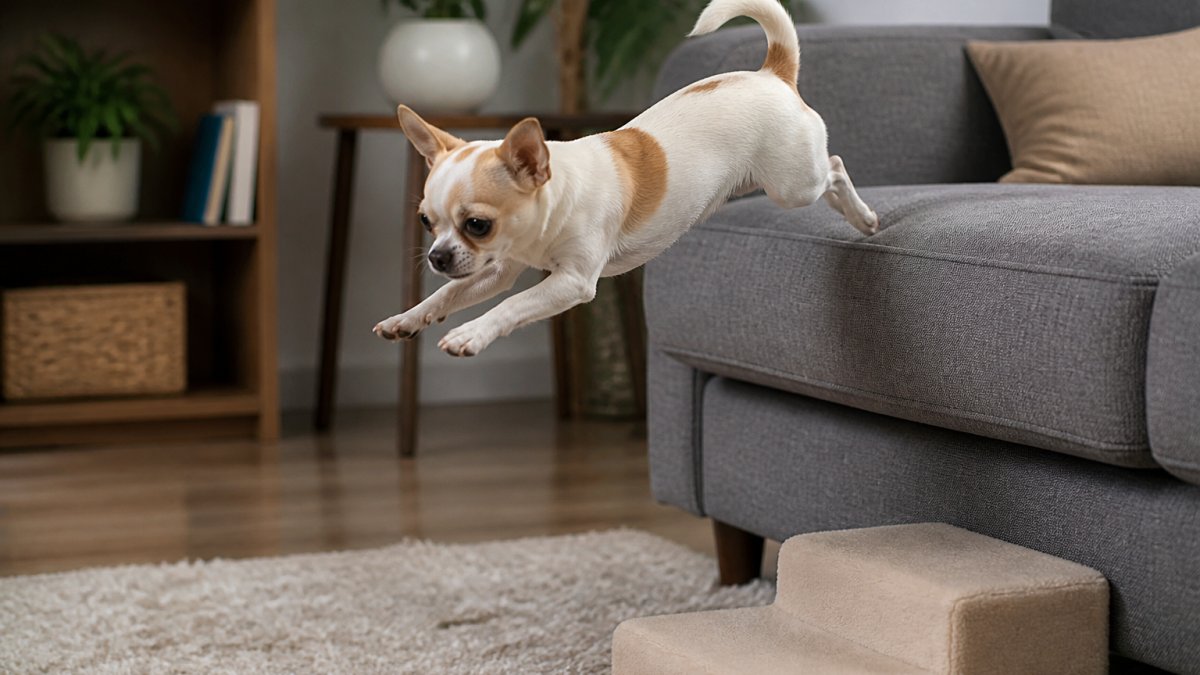
Some Chihuahuas attempt to jump down from furniture even when it is unsafe. Discourage this by always placing your puppy on the ground gently, never allowing them to jump down on their own, and rewarding them for waiting to be lifted. If your puppy launches off furniture, block the furniture rather than trying to train the jump away in the first weeks.
What to Do After a Suspected Fall or Injury
If your puppy falls or jumps from a height, act quickly:
Keep the puppy still and calm. Do not let them walk or run to test the injury.
Check for obvious signs. Look for limping, swelling, reluctance to bear weight, crying, or changes in breathing or alertness.
Call your veterinarian. Describe the height of the fall, the landing surface, and any symptoms, and follow their instructions on whether to bring the puppy in.
Do not give human pain medication. Many common pain relievers are toxic to dogs.
Watch for delayed signs. Some injuries, including internal ones, are not obvious right away. Keep the puppy confined and quiet and monitor closely.
Watch Out A fall from a bed or couch is not a minor event for a tiny Chihuahua puppy. If you are unsure whether the puppy is injured, call your veterinarian rather than waiting to see if symptoms appear.
Reducing Fall Risk Room by Room
Walk through each room at puppy level and ask where the puppy could climb or fall. In the living room, block the couch and move ottomans. In the bedroom, block the bed. In the kitchen, push chairs in and keep the puppy out during cooking. In the bathroom, keep the door closed and the toilet lid down.
Your Complete Puppy-Proofing Checklist
Use this checklist to ensure your home is safe before your puppy arrives:
Remove all small objects from floors, corners, and under furniture
Secure or cover all electrical cords
Install outlet covers in every accessible outlet
Supervision, Bathroom Breaks, and How Often to Take a Chihuahua Puppy Out to Pee
Supervision is your most powerful puppy-proofing tool. A watched puppy cannot get into trouble.
For the first few weeks, keep your puppy in sight at all times.
Tiny Chihuahua puppies need frequent bathroom breaks.
As your puppy grows, frequency decreases.
House-training takes time and patience. Expect accidents. Never punish your puppy for accidents, this teaches fear, not bladder control.
Preparing Your Home Before Your Puppy Arrives
The best time to puppy-proof is before your puppy comes home. You'll be calmer, more thorough, and your puppy will arrive to a safe environment.
Two weeks before bringing your puppy home:
Walk through every room. Get down at puppy level and look for hazards you'd normally miss.
Secure all cords and outlets. Don't wait until your puppy chews through a cord.
Move hazardous items. Cleaning supplies, medications, and toxic plants must go to high, locked storage.
Install gates and barriers. Test them thoroughly before your puppy arrives.
Set up a safe area. Include a bed, water bowl, and puppy pads.
Brief your family. Everyone in the home needs to understand puppy safety rules.
Stock supplies. Puppy food, pads, toys, and cleaning supplies for accidents.
When your puppy first arrives, introduce them to the safe area first.
Families succeed when they approach creating a puppy proof home tiny chihuahuas need as an investment in their puppy's safety and their own peace of mind.
Bringing a tiny Chihuahua puppy home is exciting and rewarding. The first step is creating a safe environment where your puppy can grow and thrive.
Frequently Asked Questions
What are the most dangerous household hazards for a tiny Chihuahua puppy?
Tiny Chihuahuas face unique risks because of their size. Small objects like buttons, rubber bands, and coins become choking hazards. Electrical cords are dangerous if chewed. Cleaning supplies, medications, and human foods (chocolate, grapes, onions) are toxic. Stairs and furniture heights that seem low to humans can cause serious falls. Gaps between furniture or under doors can trap a puppy. Always supervise closely and remove or secure anything smaller than your puppy's mouth or anything that could cause injury.
How often should I take a Chihuahua puppy out to pee?
Young Chihuahua puppies need frequent bathroom breaks. A general rule is once per hour during the day, plus after meals, naps, and playtime. Most puppies under 4 months old need 8-10 trips outside daily. At 4-6 months, reduce to 6-8 times daily. By 6 months, most puppies can manage 4-6 trips. At night, expect to go out 1-2 times until around 4-5 months old. Consistency and patience during this stage make house-training easier.
What type of puppy gate works best for a tiny Chihuahua?
Choose gates with openings small enough that your puppy cannot squeeze through. Pressure-mounted gates (no drilling) work well for temporary setups. Hardware-mounted gates are sturdier for long-term use. Look for gates 24-30 inches tall, tall enough to contain your puppy but not so high that you struggle to step over. Avoid accordion-style gates with large diamond-shaped openings; a tiny Chihuahua can slip through. Test the gate with your puppy present to ensure they cannot escape.
Should I be concerned about my Chihuahua puppy's sensitivity to cold?
Yes. Chihuahuas are sensitive to cold temperatures because of their small size and thin coat. Provide a warm resting area away from drafts, air conditioning vents, and cold tile or hardwood floors. Use soft bedding, blankets, or a heated bed (set on low). Keep your home at a comfortable temperature, especially at night. Avoid placing the puppy's sleeping area near windows or exterior doors. Cold stress can affect a young puppy's health, so maintaining warmth is part of creating a safe, comfortable environment.
Submit

Comments